Frank is devastated when he learns of the death of a long-lost friend, Morna, and is haunted by thoughts of a lost romance. So, shock turns to wonder when Morna returns as a spirit only he can hear.
The Return Policy – a supernatural romantic mystery. Available from Amazon Books in paperback and kindle from 14 August 2026. Think of along the lines of Matt Haig’s novel ‘The Midnight Library’ meets Anthony Minghella’s movie ‘Truly, Madly, Deeply.’ After twenty-one months, forty-three drafts and eighty-three thousand words, I am nearly done. This has been the most challenging of my novels as The Return Policy contains some emotive themes and I have taken care to get the right balance between drama and sensitivity.
Here is an excerpt to give you a taste:
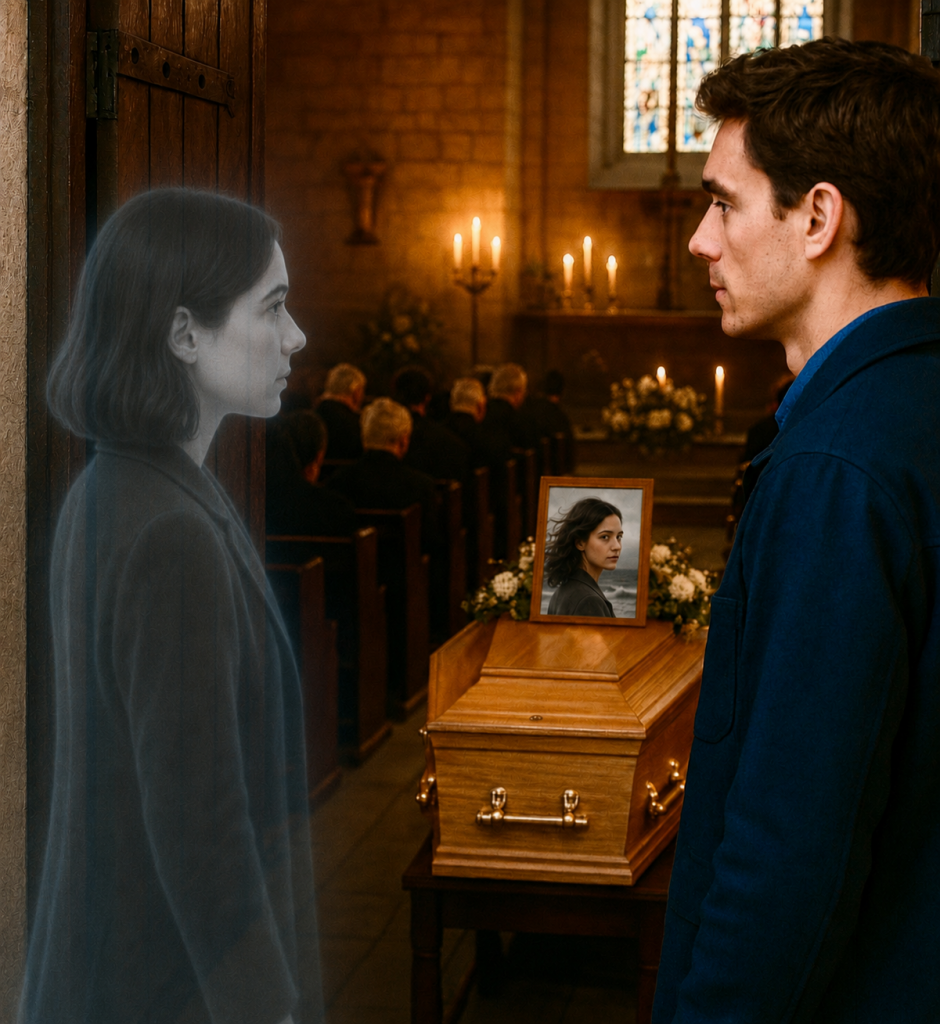
Funerals are dreadful affairs, but this one was a little different. The deceased had not died. Of course, only I knew that. For everyone else, it was real. After all, everything was as it should be: there was a body which was undoubtedly Morna’s, a death certificate and now a church full of solemn-faced mourners. I was with Reagan, which was a comfort, but most comforting of all was Morna’s narration of events.
Inside the church entrance, we were handed a hymn book and a service sheet, the latter of which had a portrait image of Morna on the front.
“Mark could have chosen a better photo than that one,” objected Morna. “I look as if I’ve just stepped out of a sandstorm.”
Looking back at the photo, I understood my friend’s feelings; she was by the sea with windswept hair. However, to me, the image was fine; Morna looked amazing. Furthermore, it appeared to be a fairly recent photo, which gave me an idea of how she had aged. I found myself captivated by her portrait. Reagan not only noticed my overlong stare at the service sheet but also my inertia and moved me along with a guiding hand. She led us to an empty pew several rows in front of us, where I had a chance to observe our surroundings. The church was respectably full, though I recognised no one and presumed the congregation was the usual eclectic mix of family, friends and work colleagues.
“That’s one thing about dying in middle age,” I thought, “you’re assured a decent turnout at your funeral.”
“I’m not even sure why some of this lot are here,” responded Morna flatly. “The only two people worth their place are you and Reagan.”
I took Morna’s words as a compliment, one which would sustain me through the difficult day ahead of us. I realised, for the first time, that when I’d read Reagan’s letter on pale blue note paper warning me of Morna’s demise, I’d misjudged the situation; the bond between the three of us had never been broken. It was stronger than ever.
As the church continued to fill, Reagan and I shuffled along our bench to make way for newcomers, who gave us respectful nods of gratitude. As I scanned the congregation, Morna’s attention was grabbed by three people who filed into the empty pew just in front of us.
“Hypocrites,” murmured Morna as two women and a man took their seats. “Especially him.”
“Who are they?” I queried silently.
“Colleagues from work. Frank, if I tell you some words, will you repeat them?”
“Of course.” I’d agreed automatically, but a twinge of nervousness struck me when Morna added.
“And speak up so the row in front can hear.”